
Your Sales Numbers Are a Mess… And It’s Your CRM’s Fault.
I’ve spent the last decade watching sales leaders chase their tails trying to solve inconsistent results. One month you’re popping champagne. The next, you’re explaining what went wrong to the executive team.
After analyzing hundreds of sales operations, I’ve noticed something surprising. It’s rarely about the team’s effort or talent. The problem is usually hiding in plain sight. Your CRM.
The Two Million Pipeline That Disappeared Overnight
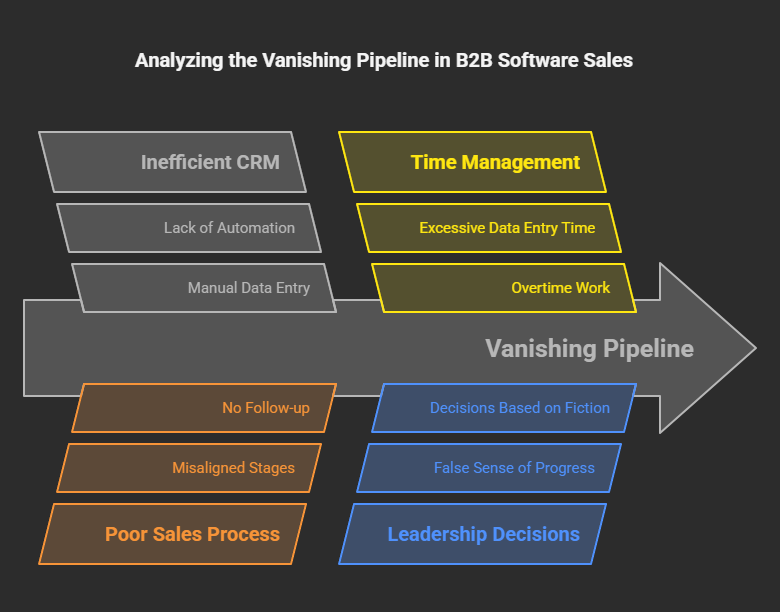
Last year, I consulted for a B2B software company with a wildly unpredictable forecast. Their VP of Sales reported a two million pipeline. Weeks later, half of it had vanished.
The team wasn’t lazy. They were working overtime. But the CRM had become a glorified spreadsheet. It wasn’t helping them sell. It was actively hurting them.
Here’s what I found:
• Manual data entry was eating up five to seven hours of selling time per week
• No follow-up automation for stalled deals
• Opportunity stages that didn’t reflect their actual sales process
The system wasn’t just inefficient. It was creating a false sense of progress and making leadership decisions based on fiction.
The Uncomfortable Truth About CRM Setups
Most CRMs are designed around management reporting, not seller productivity. That’s the root cause of pipeline chaos.
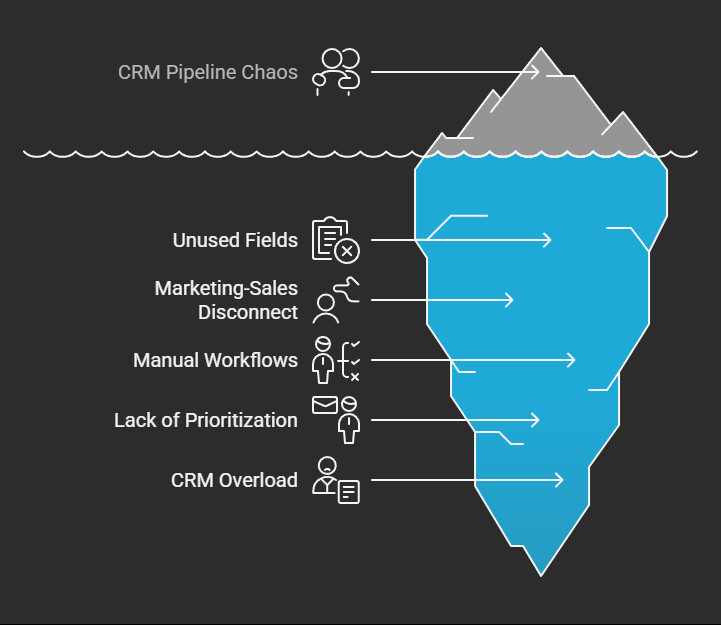
Here are the top five issues I see again and again:
• Unused fields cluttering the interface
• No connection between marketing and sales activities
• Manual workflows depending on perfect human memory
• Zero prioritization based on engagement or behavior
• Reps spending more time updating the CRM than selling
Every one of these bottlenecks compounds. Data suffers. Forecasts collapse. Reps burn out.
How We Fixed It
For that B2B company, we didn’t just rearrange fields. We rebuilt their CRM into a real sales system.
Here’s what we implemented:
1. Automated Data Capture Emails, calls, and meetings were logged automatically. That saved each rep five to seven hours per week and drastically improved data accuracy.
2. Process-Driven Workflows After a demo, the system triggered the right follow-up tasks, sent materials, and alerted the rep based on engagement. No guesswork. No delays.
3. AI-Powered Prioritization The system now scores leads and flags which deals deserve attention. Reps start their day with a focused plan instead of a guessing game.
The result? Pipeline variance dropped from 50 percent to 12 percent in one quarter. Forecasts became accurate. Revenue became predictable.
Your CRM Should Be a Revenue Engine
Here’s a simple test.
If your reps spend more time maintaining your CRM than acting on insights from it, your system needs work.
The best companies today are not relying on superstar closers. They’re building intelligent systems that empower good reps to perform at a high level every day.
They’re using automation to eliminate waste. They’re using data to guide decisions. They’re designing workflows around actual behavior, not wishful thinking.
The Path Forward
If your sales results are inconsistent, the answer might not be a new hire or another training. The problem could be right in front of you. Inside the tools you already pay for.
Fixing it might not just increase revenue. It might actually make your team enjoy selling again.
What’s one CRM problem your team keeps running into? I’m curious what you’re seeing out there.
P.S. If you want me to take a quick look at your setup, DM me “CRM”. I’ll show you where the biggest wins usually are.
#SalesAutomation #CRMOptimization #PredictableSales #SalesEfficiency #RevenueOperations


0 Comments