

Learn what’s sabotaging your outreach and how to turn things around.
Are you struggling with your cold email campaigns? You’re not alone. Many marketers and sales teams face challenges due to simple mistakes. Knowing these errors is key to improving your strategy and boosting meeting bookings.
In this article, we’ll look at common cold email mistakes that might be hurting your success. We’ll share fixes based on real data and examples. This will help you refine your approach and get better results for your business.
Whether you’re experienced or new, avoiding these mistakes is crucial. Let’s explore the errors that might be holding you back and how to fix them to reach your goals
Key Takeaways
- Avoid common cold email mistakes to improve your campaign’s effectiveness.
- Personalize your emails to increase prospect engagement.
- Optimize your subject lines for higher open rates.
- Improve email deliverability to reach more prospects.
- Enhance reply rates with clear and compelling messages.
Introduction to Cold Emailing and Its Impact
Cold emailing is a powerful tool for connecting with potential clients and growing your business. It involves sending unsolicited emails to individuals you’ve had no prior contact with, aiming to spark interest in your product or service. This approach is widely used in sales, networking, and outreach because it allows you to reach a large audience efficiently.
When done correctly, cold email campaigns can significantly boost your business growth. They help establish new relationships, generate leads, and drive sales. However, the success of these campaigns heavily depends on crafting a compelling introduction that grabs attention and makes a positive first impression.
Despite its potential, cold emailing comes with challenges. Prospects often view these emails with skepticism, and many get lost in crowded inboxes or flagged by spam filters. To overcome these obstacles, it’s crucial to ensure your emails are well-crafted, personalized, and free from common mistakes that can hinder deliverability and engagement.

Understanding Your Prospects and Building ICPs
To craft effective cold emails, you must first understand who you’re targeting. This is where building an Ideal Customer Profile (ICP) comes into play. Your ICP serves as a blueprint, helping you identify the perfect prospect for your product or service.
The Importance of Researching Buyer Personas
Researching buyer personas is crucial. It involves gathering data on demographics, industry, and specific challenges. For instance, if your target is a marketing manager at a mid-sized company, their pain points might include limited resources and the need for cost-effective solutions. By understanding these details, you can create highly targeted campaigns that resonate deeply.
This research isn’t just about collecting data; it’s about using it to refine your approach. The more you know about your prospects, the better you can personalize your messages, leading to higher engagement and response rates.
Tailoring Messages to Your Audience
Once you have a clear picture of your ICP, it’s time to tailor your messages. Personalization goes beyond just using the prospect’s name. It’s about addressing their specific needs and pain points. For example, mentioning a recent achievement of the prospect’s company can make your email feel more personal and relevant.
By tailoring your emails, you show that you’ve taken the time to understand your prospect’s unique situation. This not only boosts response rates but also helps build trust, making your outreach efforts more successful in the long run.
Segmentation and Personalization in Outreach
Effective cold email campaigns rely heavily on how well you segment your audience and personalize your messages. By dividing your prospects into targeted groups, you can create content that resonates more deeply, leading to higher engagement and better results.
Segmenting Your Prospects for Better Relevance
Segmentation means grouping your prospects by certain criteria. You can use:
- Industry: Tailor your message to the unique challenges of different sectors.
- Job Title: Address the specific responsibilities and pain points of each role.
- Company Size: Adjust your approach for startups versus enterprise-level businesses.
This way, you can make your messages feel more personal and relevant. It’s better than sending generic emails to everyone.
Personalizing Beyond First Names
Using a prospect’s name is a good start. But true personalization goes deeper. For example, you might mention:
- A recent achievement or news about their company.
- A specific feature of your product that solves a problem they face.
- A shared interest or industry trend that’s relevant to their business.
This level of personalization shows you’ve taken the time to understand their needs. It makes your email more likely to grab their attention and get a response
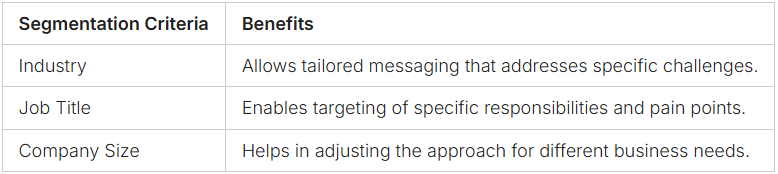
By combining segmentation with deeper personalization, you can make your outreach more effective. Well-targeted and personalized emails are more likely to engage prospects. This leads to higher reply rates and better campaign performance.
Setting Up Technical Foundations for Deliverability
Building a strong technical foundation is key for reaching your cold email campaigns’ recipients. This includes warming up your email accounts, setting up authentication protocols, and keeping your email list clean. These steps protect your sender reputation and improve deliverability.
Email Account Warm-Up and Authentication
Warming up your email account means gradually increasing the number of emails you send each day. This prevents ISPs from flagging your emails as spam. A proper warm-up period, typically three weeks, helps establish trust with email providers.
Authentication records like SPF, DKIM, and DMARC are crucial. SPF verifies your sending IP, DKIM cryptographically signs emails, and DMARC sets policies to prevent spoofing. These records ensure your emails pass security checks and reach inboxes.
Cleaning Your Email List Regularly
Regularly cleaning your email list removes inactive, invalid, and bounced addresses. This improves deliverability and reduces the risk of being flagged as spam. High bounce rates can harm your reputation, so keeping your list clean is vital.
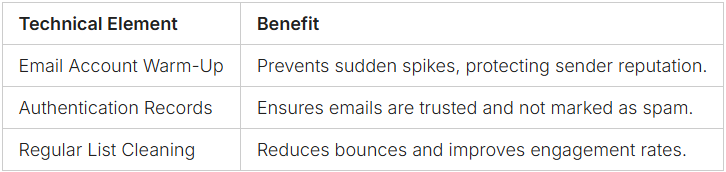
Neglecting these technical aspects can lead to poor deliverability and lower response rates. By setting up these foundations, you ensure your emails are more likely to reach and engage your prospects. This forms the backbone of a successful campaign.
Crafting Compelling and Concise Email Content
In cold email outreach, the length of your message is crucial. Busy prospects often skim through emails. It’s essential to keep your content concise and impactful. Research shows that emails under 100 words tend to perform better. They respect the recipient’s time and focus on key points.
Keeping Your Message Short and Impactful
A well-crafted, brief email grabs attention fast and clearly shows its value. Try to get your main points across in the first few sentences. This way, your message will hit home.
For example, instead of listing every feature of your product, focus on the key benefit. Every word should have a purpose, like informing, engaging, or prompting action. This makes your email easier to read and more likely to get a response.
Try different email lengths to find what works best for your audience. The goal is to make every word count, leading to higher engagement and better results.
Writing Engaging and Actionable Email Subject Lines
Your subject line is the first thing your email says. It’s the first step in getting your message across. A good subject line should make people curious and feel like they need to act fast.
A/B Testing Subject Lines for Better Open Rates
Testing different subject lines is a smart way to find what works best. Try changing a few words to see what grabs more attention. Even small changes can make a big difference in how many people open your email.
Keep your subject lines short and to the point. They should match what your audience needs. For example, “Boost Your Sales Team’s Efficiency Today” is better than “Check Out Our New Product.”
“The subject line is the most critical part of the email. It’s the difference between being seen and being ignored.”
Try using humor, making it personal, or adding a sense of urgency. For example, “Your Competitors Are Already Ahead – Here’s How to Catch Up” grabs attention. Just remember, your subject line should stand out without being too gimmicky.
Improving your subject line can really help your email campaign. By testing different approaches and focusing on what your audience likes, you can get more people to open your emails.
Cold Email Mistakes: A Deep Dive
Fixing common mistakes in your outreach can really improve your results. Two big problems are using generic language and unclear messages.
Avoiding Generic and Overly Salesy Tones
Prospects often ignore emails that feel impersonal. Using generic language makes your message seem fake. Instead, tailor your message to the prospect or their company to create a real connection.
Dealing with Multiple CTAs and Unclear Messaging
Having too many calls to action can confuse people. Stick to one clear CTA, like “Schedule a call today.” Unclear messages, like “exciting opportunities,” don’t grab interest. Be specific about what you offer to engage your audience.
- Generic language leads to low engagement as it lacks personal touch.
- Multiple CTAs confuse recipients, reducing the likelihood of action.
- Unclear messaging makes it hard for prospects to understand your value proposition.
To make your emails more compelling, focus on being clear and personal. Avoid being too pushy. Use a friendly style that connects with your audience. Make sure your message is short and easy to understand.
Reviewing your drafts for common mistakes can make your campaign better. Fixing these issues helps your emails connect with your audience. This leads to better results.
Optimizing Your Follow-Up Strategy
Follow-up emails are key to successful cold email campaigns. They give you a second chance to reach out to those who didn’t respond first. But, timing and approach are crucial to avoid overwhelming your prospects.
Planning Follow-Ups Without Overwhelming Prospects
Research shows one email is not enough. Prospects might need reminders or more info to act. A well-thought-out follow-up sequence can greatly improve your campaign’s success. But, it’s easy to be too pushy.
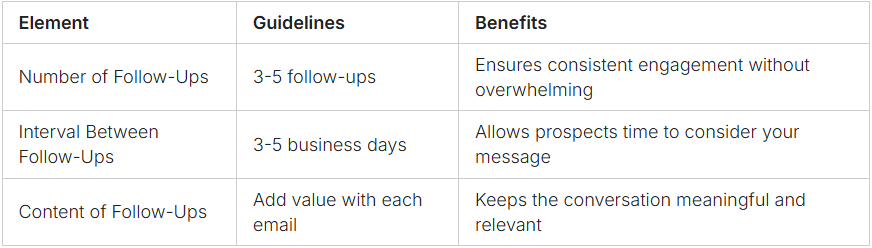
Use data and tracking to refine your follow-up strategy. Pay attention to open rates, reply rates, and engagement metrics to determine the best timing for your emails. Each follow-up should add value, whether it’s providing additional information, addressing a specific concern, or sharing a relevant case study.
Remember, follow-ups should be an integral part of your email campaign, not an afterthought. By carefully planning your sequence and spacing out your emails, you can maintain prospect engagement without causing frustration. This balanced approach ensures your campaign remains effective and respectful of your audience’s time.
Timing and Frequency: Sending Emails at the Right Moment
Timing is crucial for your outreach success. Sending emails at the right time can greatly increase open rates and responses.
Understanding Time Zones and Office Hours
Respecting your prospects’ time zones and office hours is key. Sending emails during business hours boosts the chance of them being read. Avoid sending on weekends and holidays when prospects are less likely to check their emails.
- Respect Time Zones: Ensure your emails align with the prospect’s local business hours.
- Avoid Weekends and Holidays: Send emails during standard working days for better engagement.
Testing different send times and frequencies helps find what works best for your audience. Use automation tools to schedule emails and optimize delivery. Proper timing boosts engagement, making your campaigns more effective.
Measuring Success and Making Data-Driven Improvements
It’s key to check how well your cold email campaigns are doing. By looking at important metrics, you can make your outreach better.
Tracking Open, Reply, and Conversion Rates
Reply rates and conversion rates tell you a lot. Open rates show if your subject lines grab attention but we don’t recommend tracking this. The pixel you send with the first email has a high change to get your email in the spam folder.
Reply rates tell you if your message hits home. Conversion rates show how well your campaign meets your business goals.
Analytics tools let you see how your campaign is doing in real time. This helps you spot what’s working and what’s not. By making small changes, you can get better results.

Conclusion
By fixing common mistakes and making smart changes, you can make your cold email campaigns work better. This article covered important topics like personalizing your emails and choosing the right timing.
Understanding your audience and always improving your strategy are key to success. By combining creativity with technical skills, you can avoid mistakes and get better results. Start making these changes today to see your campaigns improve.
Fixing these issues will not only make your emails more successful but also help you connect better with your audience. Start improving your cold email strategy now and see the results you want.
F.A.Q.
How can I improve my reply rates in outreach campaigns?
Focus on making your emails personal and clear. Use subject lines that grab attention and talk to your prospect’s needs. Keep your emails short and have a clear call-to-action to get more replies.
How often should I follow up with prospects?
Follow up no more than 3-4 times to avoid overwhelming your prospects. Space out your follow-ups by 3-7 days and ensure each message adds value or provides additional context. Stop if the prospect explicitly opts out or requests no further contact.
What are the key elements of a successful cold email campaign?
A strong subject line, personalized content, a clear value proposition, and a specific call-to-action are essential. Additionally, proper segmentation of your audience and maintaining good deliverability practices are crucial for success.
How can I personalize my outreach beyond just using the prospect’s name?
Research your prospect’s industry, recent achievements, or specific challenges. Tailor your message to address their unique needs and demonstrate how your service or product can solve their problems. This shows genuine effort and understanding.
What is the best time to send cold emails?
Send emails during business hours, typically between 9 AM and 5 PM in your prospect’s time zone. Avoid weekends and holidays. Mid-morning or early afternoon is often ideal for higher engagement rates.
How can I ensure my emails don’t end up in spam folders?
Use a clean email list, avoid spammy keywords, and authenticate your domain. Warm up your email account by gradually increasing the number of emails sent. Regularly clean your list to remove inactive or bounced addresses.
How can I segment my prospect list for better relevance?How can I segment my prospect list for better relevance?
Segment based on industry, company size, job title, or specific pain points. Use data from your CRM or research tools to create targeted groups. This ensures your messaging is tailored to the needs of each segment, improving engagement.
What should I include in my email to ensure it’s actionable?
Keep your message short and include a clear call-to-action, such as scheduling a call, requesting a meeting, or providing more information. Avoid multiple CTAs, as this can confuse your prospect and reduce the likelihood of a response.


0 Comments